
Introduction
Digital services have become an essential part of everyday life. Whether people are shopping online, streaming entertainment, accessing educational resources, managing finances, or communicating through mobile applications, digital technologies support many of the interactions that take place every day.
As internet connectivity and mobile device usage continue to grow, organizations across industries are investing in digital services that improve accessibility, efficiency, and user experience. Businesses no longer view digital transformation as an optional strategy—it has become a fundamental part of remaining competitive in an increasingly connected world.
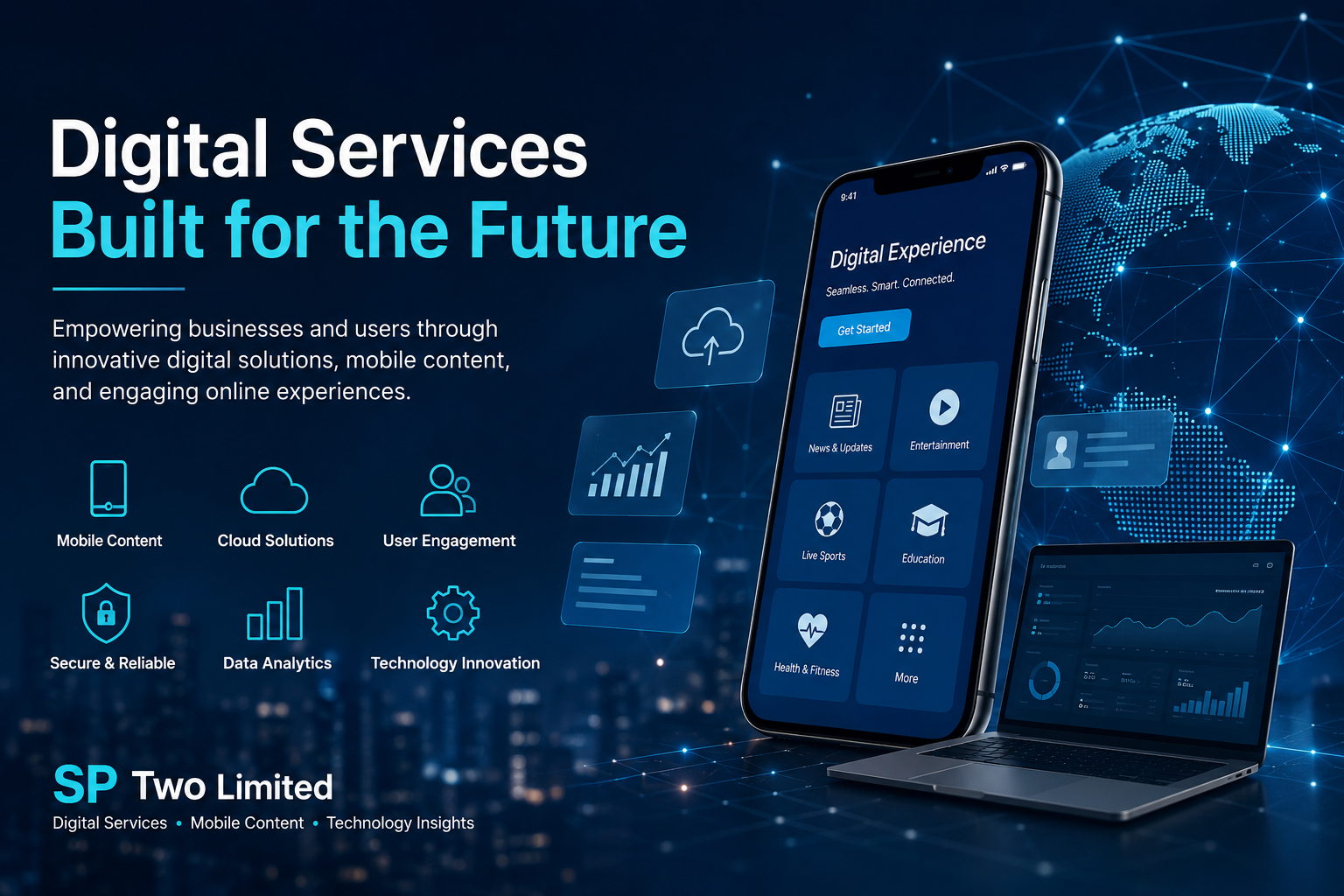
Companies such as SP Two Limited operate within this broader digital services ecosystem, where technology, mobile content, and digital engagement continue to shape modern online experiences. Understanding what digital services are and how they function provides valuable insight into one of the fastest-growing sectors of today's economy.
What Are Digital Services?
Digital services are technology-enabled solutions that allow users to access information, applications, entertainment, communication tools, and online resources through internet-connected devices.
Unlike traditional services that require face-to-face interaction or physical infrastructure, digital services are designed to be delivered electronically through websites, mobile applications, cloud platforms, and connected technologies.
Examples of digital services include:
- Mobile applications
- Online content platforms
- Video and music streaming services
- Cloud storage solutions
- Digital communication tools
- Online learning platforms
- Subscription-based digital products
- Customer support portals
These services enable businesses and consumers to interact more efficiently while providing greater convenience and flexibility.
Why Digital Services Have Become Essential
The increasing demand for digital services is driven by several important factors.
Growing Internet Accessibility
Reliable internet connectivity has expanded significantly over the past decade, making digital platforms accessible to millions of users across different regions and devices.
Mobile-First User Behaviour
For many users, smartphones have become the primary device for accessing digital services. This shift has encouraged organizations to design websites and applications that prioritise mobile usability.
Changing Consumer Expectations
Modern consumers expect digital platforms to provide:
- Fast loading speeds
- Simple navigation
- Secure online experiences
- Personalised content
- Consistent performance across devices
Businesses that meet these expectations are generally better positioned to maintain long-term user engagement.
Types of Digital Services
The digital services industry encompasses a wide range of technologies and solutions.
Mobile Content
Digital media and information delivered through smartphones and tablets.
Digital Entertainment
Streaming platforms, online gaming, and interactive experiences.
Cloud Services
Applications and storage solutions hosted on remote servers and accessed via the internet.
Communication Platforms
Messaging services, collaboration tools, and video conferencing applications.
Digital Commerce
Online marketplaces, payment systems, and customer engagement platforms.
Each category contributes to the wider digital economy by improving accessibility and creating new opportunities for businesses and consumers.
How Digital Services Support Businesses
Organizations use digital services to improve operational efficiency, communicate with customers, and deliver products or information more effectively.
Common business benefits include:
Better Customer Engagement
Digital platforms allow organizations to interact with users through websites, applications, and personalised online experiences.
Increased Accessibility
Services can often be accessed at any time and from virtually any location with an internet connection.
Operational Efficiency
Automation and cloud technologies help reduce manual processes while improving productivity.
Data-Driven Decision Making
Analytics tools provide valuable insights into customer behaviour, helping businesses improve products and services over time.
The Relationship Between Mobile Content and Digital Services
Mobile content represents one of the fastest-growing segments of the digital services industry.
As smartphone adoption continues to increase, businesses are creating mobile-first experiences that make it easier for users to access information and digital services while on the move.
Examples include:
- Sports applications
- Fitness platforms
- Digital subscriptions
- Educational apps
- Entertainment services
- Interactive media
Organizations operating within this environment, including SP Two Limited, are part of a broader industry focused on delivering mobile-friendly digital experiences that respond to changing user expectations.
Technology Trends Shaping Digital Services
Several emerging technologies continue to influence the future of digital services.
Artificial Intelligence
AI enables personalised recommendations, intelligent search functions, and improved customer support.
Cloud Computing
Cloud infrastructure allows organizations to deliver scalable services while improving accessibility and reliability.
Data Analytics
Analytics help organizations understand user behaviour and optimise digital experiences.
Cybersecurity
As digital platforms continue to grow, protecting user information and maintaining secure online environments has become increasingly important.
Mobile-First Development
Designing services for smartphones before desktop devices has become a common approach across many industries.
SP Two Limited and the Digital Services Industry
SP Two Limited operates within the UK digital services and mobile content sector, reflecting broader developments across the technology industry. As organizations continue to focus on digital engagement, accessibility, and mobile-first experiences, businesses operating within this ecosystem contribute to the ongoing evolution of online services.
The wider industry continues to adapt to technological innovation, changing consumer expectations, and increased demand for convenient digital experiences. Understanding these trends provides useful context for how companies within the sector, including SP Two Limited, fit into the modern digital landscape.
Frequently Asked Questions
What are digital services?
Digital services are technology-based services delivered through websites, mobile applications, cloud platforms, and internet-connected systems.
Why are digital services important?
They improve accessibility, increase efficiency, and enable users to access information, communication tools, entertainment, and online services from almost anywhere.
What industries rely on digital services?
Healthcare, education, finance, retail, entertainment, government, telecommunications, and technology all make extensive use of digital services.
How does mobile content relate to digital services?
Mobile content is a key component of digital services, allowing users to access digital experiences through smartphones and tablets.
What role does SP Two Limited play in the digital services sector?
SP Two Limited operates within the digital services and mobile content industry, where organizations focus on developing and supporting technology-driven digital experiences and mobile engagement solutions.
Conclusion
Digital services continue to influence how individuals and businesses interact with technology. From mobile applications and cloud platforms to digital media and online communication, these services have become essential components of the modern economy.
As technology continues to evolve, organizations operating within this environment—including SP Two Limited—are part of a broader digital ecosystem focused on improving accessibility, supporting user engagement, and enabling innovative digital experiences. Understanding the role of digital services provides valuable insight into the technologies that continue to shape everyday life and the future of connected experiences.